
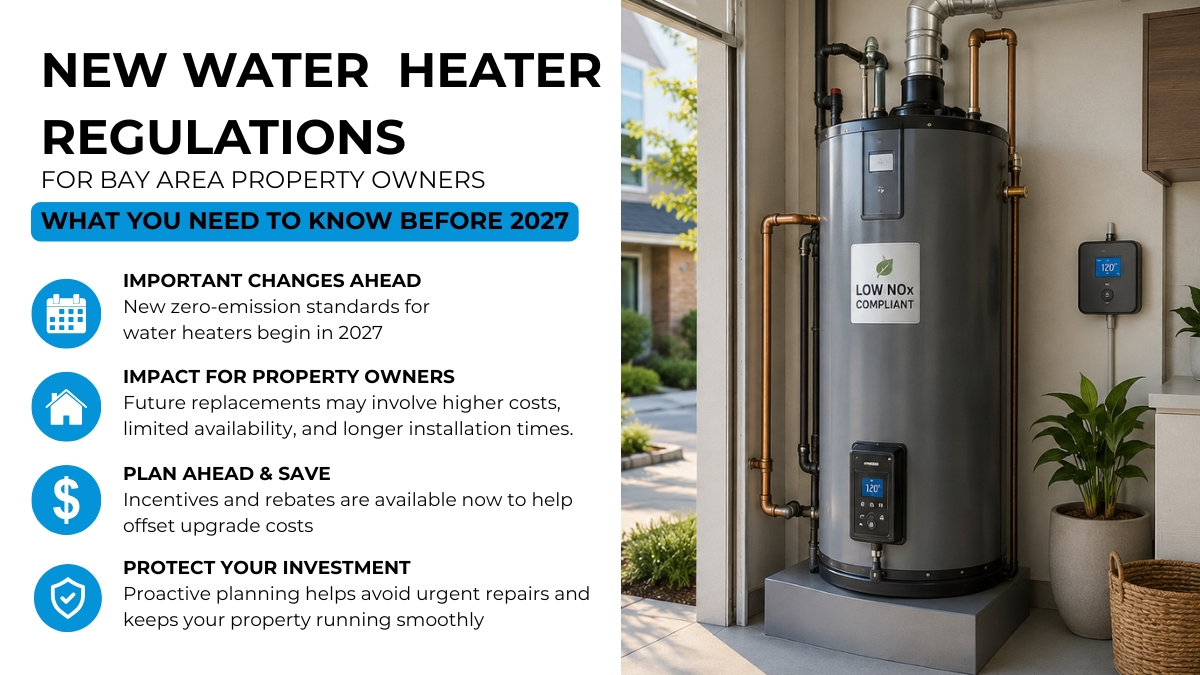
New Water Heater Regulations for Bay Area Property Owners: What You Need to Know Before 2027
If you own rental property in the Bay Area, upcoming water heater regulations are worth paying attention to now—not when your current system fails.
These changes are particularly relevant for owners of rental properties, duplexes, triplexes, and apartment buildings throughout San Mateo County and the greater Bay Area. While the regulations primarily affect future installations rather than existing equipment, they could impact replacement costs, equipment availability, and long-term maintenance planning.
Understanding the New Regulations
The Bay Area Air Quality Management District (BAAQMD) has adopted regulations aimed at reducing nitrogen oxide (NOx) emissions from residential water heating equipment.
The regulations do not require property owners to replace existing gas water heaters. Instead, they will affect what equipment can be installed in the future.
Key Timeline
Through 2026
Property owners may continue to install and replace traditional gas water heaters under current regulations.
Beginning in 2027
Newly installed water heaters in the Bay Area will be subject to updated zero-emission standards, limiting the use of many conventional gas-fired units.
Because regulations and implementation details may evolve, owners should consult with qualified contractors and local agencies regarding requirements specific to their property.
Why This Matters for Rental Property Owners?
For landlords, a failed water heater is more than an inconvenience—it is often an urgent maintenance issue.
California habitability standards generally require landlords to provide tenants with reliable hot water. As new regulations take effect, future replacements may involve:
Changes in equipment availability
Longer installation timelines
Additional electrical or infrastructure requirements
Higher replacement costs
Having a plan before a system fails can help reduce tenant disruption and avoid costly emergency decisions.
Questions Property Owners Should Consider
How Old Are Your Water Heaters?
Most residential water heaters have a life expectancy of approximately 8–12 years. If your equipment is nearing the end of its useful life, now may be a good time to begin evaluating replacement options.
What Are Your Long-Term Plans?
Whether you are planning to sell in the next few years or hold the property long-term, understanding the condition of major building systems can help you make informed investment decisions.
Have You Researched Available Incentives?
Depending on the equipment selected, rebates, tax credits, and utility incentives may be available to help offset upgrade costs.
What Should Owners Do Now?
Most property owners do not need to take immediate action, but this is a good opportunity to:
Review the age and condition of existing water heaters
Identify systems nearing replacement
Research available rebates and incentives
Obtain preliminary replacement estimates
Incorporate future upgrades into your maintenance budget
Final Thoughts
The upcoming water heater regulations represent an important change for Bay Area property owners. While existing systems are not being forced into immediate replacement, planning ahead can help reduce costs, minimize tenant disruption, and avoid emergency replacement situations.
At Earth Real Estate & Property Management, we help property owners throughout San Mateo County and the Bay Area navigate changing regulations, maintenance planning, capital improvements, and day-to-day property management challenges. If you have questions about how upcoming water heater regulations may affect your property, our team is available to help evaluate your options and develop a proactive plan that supports your long-term investment goals.